

 +86 13110089902
 bella.zhang@free-optic.com

Qu'est-ce qu'une machine de marquage au laser ?
3 décembre 2025
Introduction à la technologie du marquage au laser
Une machine de marquage au laser est un appareil de précision qui utilise un faisceau lumineux concentré pour créer des marques permanentes de haute qualité sur divers matériaux. Il est devenu une technologie de base dans la fabrication moderne, le contrôle de la qualité et l'identification des produits. Qu'il s'agisse de numéros de série, de codes-barres, de logos, de motifs ou de textes micro-gravés, le marquage laser offre clarté, rapidité et durabilité sans endommager le matériau.
L'industrie exigeant des méthodes de marquage plus fiables et plus respectueuses de l'environnement, les entreprises se tournent vers des équipements de pointe tels que le système de marquage professionnel de l'UE. Machines de marquage au laser proposés par Free Optic. Leurs systèmes sont conçus pour l'efficacité, la précision et l'utilisation à long terme dans de nombreux secteurs industriels.
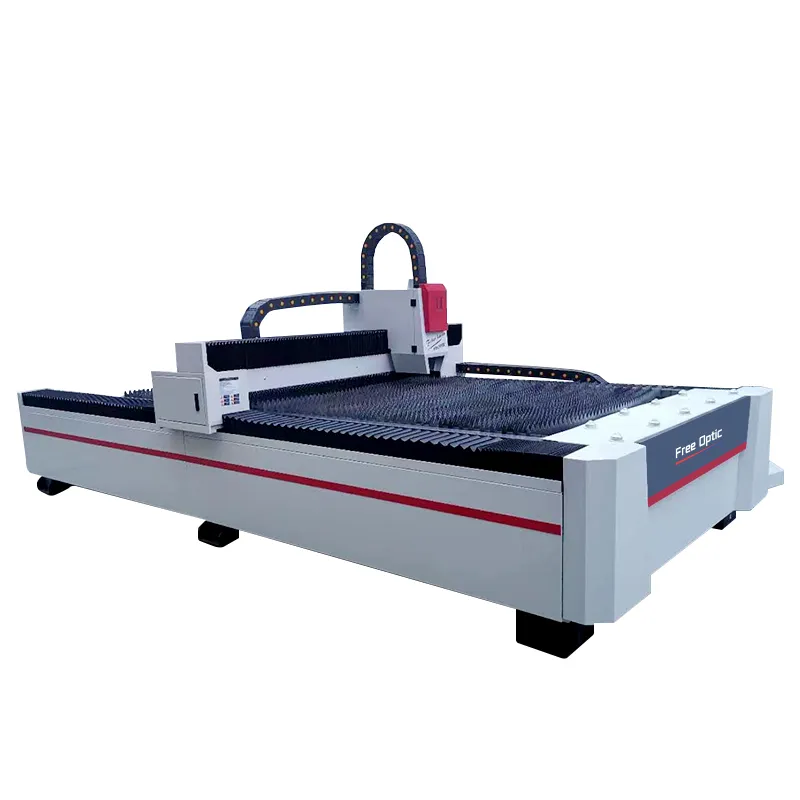
Fonctionnement d'une machine de marquage au laser
Le marquage laser est basé sur l'interaction entre un faisceau laser et la surface d'un matériau. Lorsque le faisceau focalisé touche la surface, il provoque un échauffement localisé, une oxydation, une carbonisation ou une micro-gravure. Ces changements créent une marque durable qui ne peut pas être facilement effacée ou usée.
Le système utilise un scanner galvanométrique pour diriger rapidement le faisceau laser, ce qui lui permet de tracer des caractères, des graphiques et des codes avec une précision exceptionnelle. Le marquage à grande vitesse garantit l'efficacité, même dans les environnements de production de masse. Comme le marquage laser n'utilise pas d'encre, de solvants ou d'outils à contact, il est plus propre et plus cohérent que l'impression traditionnelle ou la gravure mécanique.
Principaux éléments d'une machine de marquage au laser
Une machine de marquage laser typique comprend plusieurs composants essentiels. La source laser est le cœur du système, générant une énergie laser stable et de haute qualité. La tête galvanométrique contrôle le mouvement du faisceau à l'aide de miroirs à commutation rapide. La lentille de champ concentre le faisceau sur le matériau, garantissant un point de marquage fin. Un module de contrôle et un système logiciel gèrent les paramètres de marquage, la disposition du dessin et le positionnement.
Free Optic intègre des pièces optiques de haute précision et des composants électroniques stables dans ses produits. Machine de marquage au laser pour le métal permettant aux utilisateurs d'obtenir des résultats constants avec un minimum d'entretien et une grande facilité d'utilisation.
Types de technologies de marquage au laser
Les machines de marquage laser se déclinent en plusieurs variantes en fonction de la longueur d'onde et de l'application. Les machines de marquage laser à fibre sont idéales pour les métaux et les plastiques industriels en raison de leur taux d'absorption élevé et de la qualité de leur faisceau. Les lasers CO₂ excellent dans le marquage du bois, du cuir, du papier et des matériaux non métalliques. Les lasers UV permettent un marquage ultrafin pour l'électronique, le verre et les plastiques médicaux.
Chaque type répond à des besoins spécifiques, mais les lasers à fibre dominent la fabrication industrielle en raison de leur rapidité, de leur durabilité et de leur longue durée de vie. Ces machines sont essentielles pour les usines qui exigent une traçabilité des produits, des numéros de série et un marquage de précision.
Quels matériaux les machines de marquage au laser peuvent-elles traiter ?
Les machines de marquage laser fonctionnent sur une large gamme de matériaux, ce qui les rend inestimables dans tous les secteurs d'activité. Les métaux tels que l'acier inoxydable, l'aluminium, le cuivre, le titane et le carbure réagissent exceptionnellement bien aux lasers à fibre. Les plastiques, le caoutchouc, le bois, le cuir et les céramiques sont facilement traités avec des longueurs d'onde laser adaptées.
Les fabricants font appel au marquage laser pour les pièces automobiles, l'électronique, les outils, les instruments médicaux, les biens de consommation et les emballages. La possibilité de marquer des formes, des surfaces et des textures différentes contribue à la popularité croissante de cette technologie.
Avantages de l'utilisation de machines de marquage au laser
Le marquage laser est préféré pour sa précision, sa qualité durable et son approche de traitement propre. La méthode sans contact évite d'endommager physiquement la pièce, ce qui est crucial pour les composants délicats ou de grande valeur. Les marques sont résistantes à l'usure, à la chaleur, aux produits chimiques et à la corrosion.
Le marquage laser élimine également le besoin de consommables tels que l'encre ou les agents de gravure chimiques, ce qui réduit les coûts d'exploitation et l'impact sur l'environnement. Sa vitesse et sa conception facilitant l'automatisation permettent aux usines d'accroître leur productivité et de maintenir une qualité constante sur des lots de production importants.
Applications dans les secteurs industriels modernes
Les machines de marquage laser jouent un rôle essentiel dans les industries qui ont besoin d'identification, de traçabilité et de marquage. Les fabricants d'électronique gravent les codes des composants et les cartes de circuits imprimés. Les entreprises du secteur automobile marquent les numéros VIN, les pièces de moteur et les composants de sécurité. Les fabricants d'appareils médicaux utilisent la technologie laser pour les codes UDI conformes à la FDA.
Les outils de quincaillerie, les couteaux, les boîtiers d'appareils électroniques, les bijoux et les cadeaux personnalisés bénéficient également des finitions propres et décoratives produites par le marquage laser. La capacité de produire à la fois une gravure profonde et une coloration fine de la surface fait du marquage laser un choix polyvalent pour de nombreuses applications.
Commodité opérationnelle et facilité d'utilisation
Les machines de marquage laser modernes sont conçues pour être conviviales. Les opérateurs importent leur dessin (texte, logo, code-barres ou graphique) dans le logiciel de commande, règlent les paramètres tels que la puissance et la vitesse, puis prévoient la zone de marquage à l'aide du positionnement de la lumière rouge. Après avoir confirmé la distance de mise au point, le processus de marquage commence par une simple commande.
Ceux qui recherchent des conseils opérationnels détaillés peuvent se référer à l'article technique de Free Optic Qu'est-ce qu'une machine de marquage au laser ?qui fournit des informations plus approfondies sur les principes de fonctionnement et l'utilisation pratique.
Pourquoi de nombreuses entreprises choisissent les machines à fibre optique libre
Free Optic est devenu un fournisseur de confiance pour la technologie de marquage laser industriel grâce à l'importance qu'il accorde à l'ingénierie de précision, à la fiabilité des performances et à l'assistance à la clientèle. Les produits de Free Optic Machines de marquage au laser sont dotés de composants optiques avancés, de conceptions robustes et d'interfaces logicielles intelligentes. Ces caractéristiques garantissent une stabilité à long terme, une vitesse de marquage rapide et une excellente clarté sur les matériaux métalliques et non métalliques.
Leur Machine de marquage au laser pour le métal est largement utilisée dans les usines qui exigent des gravures profondes, des marquages très contrastés et un fonctionnement fiable de la machine dans des environnements exigeants.
Résumé
Une machine de marquage laser est un outil essentiel pour la production moderne, offrant une précision, une durabilité et une efficacité inégalées. En utilisant un faisceau laser focalisé, elle crée des marques permanentes sur les métaux, les plastiques et d'autres matériaux, sans usure ni déformation. Sa vitesse, sa précision et sa compatibilité avec l'automatisation en ont fait un choix privilégié pour la traçabilité, le marquage et la fabrication industrielle. Grâce à son équipement de pointe et à son soutien professionnel, Free Optic fournit des solutions de marquage laser de haute qualité adaptées à diverses industries et à un développement à long terme.