+86 13110089902
 bella.zhang@free-optic.com

Máquina de marcado láser de piezas: la guía definitiva para la trazabilidad en la fabricación de metales (2026)
28 de agosto de 2026
En la fabricación industrial moderna, la trazabilidad de las piezas ya no es un lujo, sino un requisito normativo estricto. Tanto si se fabrican componentes aeroespaciales, piezas de automoción o instrumentos médicos de precisión, un sistema fiable máquina de marcado láser de piezas es la forma más eficaz de garantizar una identificación permanente, legible y a prueba de falsificaciones.
A medida que los fabricantes van dejando atrás los sistemas tradicionales de marcado por puntos y de inyección de tinta, los láseres de fibra se han consolidado como el estándar del sector. En esta guía, Free Optic analiza por qué conviene pasarse a los sistemas avanzados grabado por láser La tecnología es fundamental para las líneas de producción modernas y para saber cómo elegir la máquina adecuada para tus piezas metálicas específicas.
1. Por qué es importante la trazabilidad en el sector de los componentes industriales
Desde el control de calidad hasta el seguimiento de la garantía, cada engranaje, cojinete y chasis requiere un identificador único (como un código Data Matrix 2D, un código QR o un número de serie). Una máquina de marcado láser de alta calidad crea marcas de alto contraste que resisten entornos hostiles, como el calor extremo, la fricción y los lavados químicos. Esto garantiza que se pueda rastrear el origen y el historial de fabricación de una pieza décadas después de que salga de fábrica.
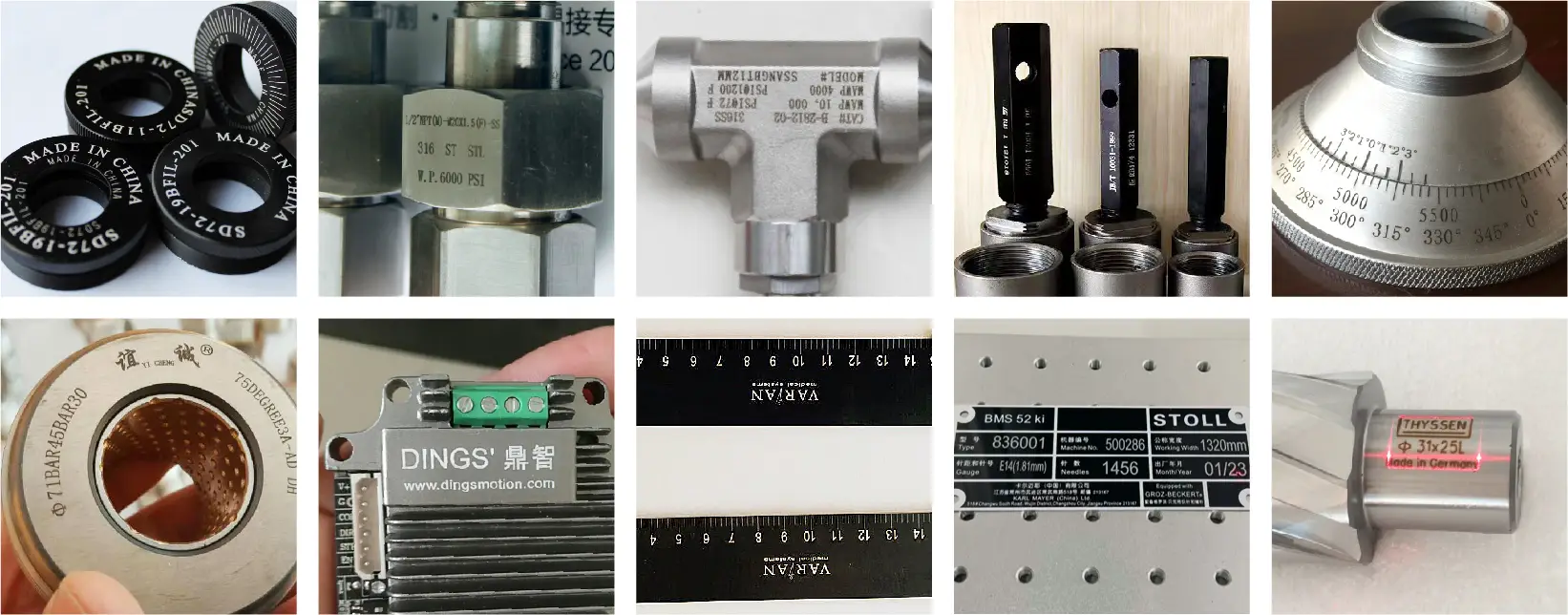
2. Elección de la configuración adecuada para la máquina de marcado láser de piezas
El tamaño y la forma de tus piezas determinan el tipo de máquina que necesitas. En Free Optic, recomendamos tres configuraciones principales:
- Marcadores láser de sobremesa: Ideales para piezas pequeñas y fáciles de manipular, como carcasas de aparatos electrónicos, herramientas de ferretería y joyas. Estas máquinas caben fácilmente en un banco de trabajo y son perfectas para el procesamiento por lotes.
- Marcadores portátiles de mano: Si necesitas marcar piezas enormes e inamovibles (por ejemplo, tubos de acero de gran tamaño o bloques de motor), un cabezal de marcado portátil permite al operario llevar el láser directamente a la pieza de trabajo.
- Marcadores láser volantes industriales: Diseñadas para líneas de producción continuas, estas máquinas se integran con cintas transportadoras y sensores fotoeléctricos para marcar piezas «sobre la marcha» a gran velocidad.
3. Selección de potencia: ¿20 W, 30 W o 50 W?
La potencia de tu fuente láser determina la velocidad y la profundidad del grabado:
| Potencia de salida | Ideal para | Profundidad de grabado |
|---|---|---|
| 20 W / 30 W | Marcado superficial, recocido y códigos de barras en acero inoxidable, aluminio y latón. | Ligero (0,01 mm – 0,2 mm) |
| 50 W / 100 W | Grabado profundo, procesamiento a alta velocidad, fabricación de moldes y marcado de armas de fuego. | Profundo (0,5 mm – 1,0 mm+) |
Preguntas más frecuentes (FAQ)
Pregunta 1: ¿Puede una máquina de marcado láser de piezas marcar piezas curvas o cilíndricas?
R: Sí. Al equipar la máquina con un accesorio de eje giratorio, el software gira automáticamente la pieza cilíndrica (como un tubo o un anillo), lo que garantiza un marcado uniforme y sin deformaciones en toda la circunferencia.
Pregunta 2: ¿Qué materiales puede marcar un láser de fibra?
R: Los láseres de fibra están optimizados para metales. Ofrecen excelentes resultados en acero inoxidable, acero al carbono, aluminio, latón, cobre, titanio y metales recubiertos. También pueden marcar determinados plásticos técnicos duros, como el ABS y el PVC.
Optimiza tu línea de producción hoy mismo
Invertir en lo adecuado Máquina de marcado láser de fibra portátil de doble cabezal garantiza que sus piezas cumplan con las estrictas normas del sector, al tiempo que reduce los costes de mantenimiento a largo plazo. Póngase en contacto con Free Optic para solicitar una prueba gratuita y deje que nuestros expertos le recomienden la configuración ideal para sus necesidades de fabricación.