

 +86 13110089902
 bella.zhang@free-optic.com

Laser Processing Solutions for Industrial Applications
Automotive Industry
As automobile manufacturing evolves towards intelligent, automated, and high-quality standards, component marking is no longer simply about “typing,” but involves: product traceability, quality control, branding, and regulatory compliance.
Traditional marking methods (such as inkjet printing, mechanical engraving, and labeling) are no longer sufficient to meet the automotive industry’s requirements for durability, precision, and data-driven management.
Laser marking technology, with its permanent, high-precision, and automated capabilities, has become a core technology for automotive industry marking solutions.
Core Advantages of Laser Marking Machines in the Automotive Industry:
1. Permanent Marking (Solving Durability Issues)
Laser marking machines creates markings by altering the surface structure of materials: It does not fade or peel off; it is resistant to high temperatures and corrosion; and it can withstand extreme environments such as engines. Its value lies in enabling product identification throughout its entire lifecycle.
2. Ultra-High Precision (Solving Fine Marking Issues)
It can achieve micron-level marking; it supports tiny characters and QR codes. For example, small parts, and precision electronic components. Its value lies in improving marking clarity and information density.
3. Complete Traceability System Support (Solve Data Management Issues)
Can be marked with: Data Matrix, QR codes, barcodes, unique serial numbers, and can be integrated with MES systems. Its value lies in enabling production traceability, quality tracking, and after-sales management.
4. Non-Contact Processing (Solve Material Damage Issues)
No mechanical stress; does not damage material structure. Applicable materials include metals (steel, aluminum), plastics, and coated surfaces. Its value lies in ensuring product performance and safety.
5. High Automation (Solve Efficiency Issues)
Supports online flying marking; can be integrated with robots/production lines. Its characteristics are high-speed and continuous processing. Its value lies in adapting to large-scale automotive production.
6. Strong Multi-Material Adaptability
Equipped with metal parts (engines, chassis); plastic parts (interior, exterior); coated parts. Its value lies in one set of equipment covering multiple applications.
7. Environmentally Friendly and Low-Cost
No consumables (no ink, no labels); no pollution. Its value lies in reducing long-term operating costs.
Automotive Industry Marking Applications: Powertrain, Electronics, and VIN Coding
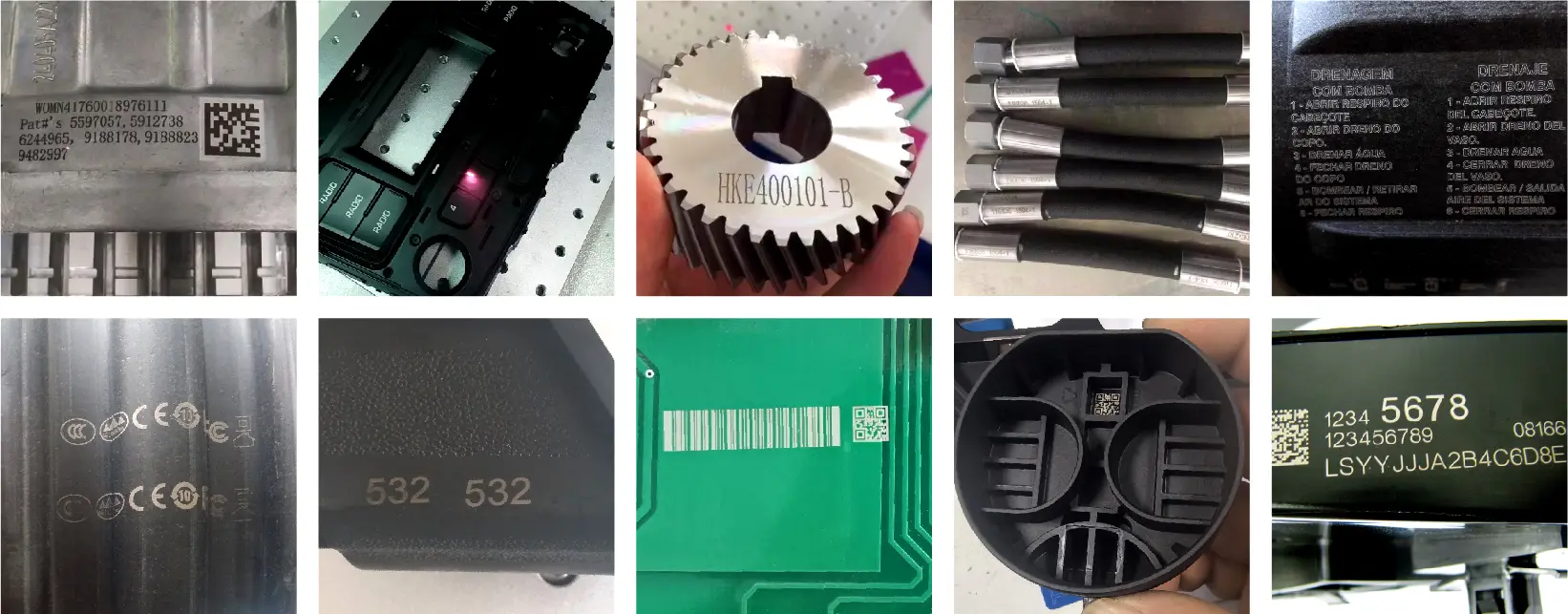
1. Powertrain Components Marking to mark art numbers, Batch codes, Data Matrix codes
- Engine blocks, cylinder heads
- Crankshafts, gears, transmission parts
- Frames and suspension systems
- Brake components
- Fasteners (bolts, nuts)
- ECU modules
- Sensors and connectors
- PCB boards
- Dashboard panels and buttons
- Plastic housings
- Automotive lighting components
- Vehicle Identification Number (VIN)
- Metal nameplates
- Safety labels
Laser Marking Equipment and Application Demonstration Videos
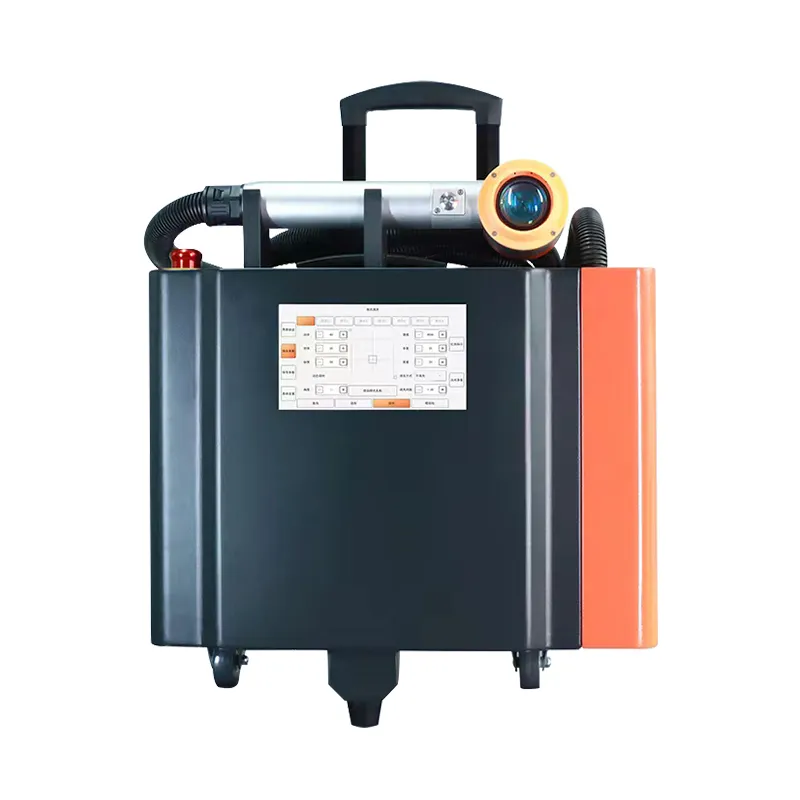
Portable Handheld Fiber Laser Cleaning Machine 100W 200W 300W
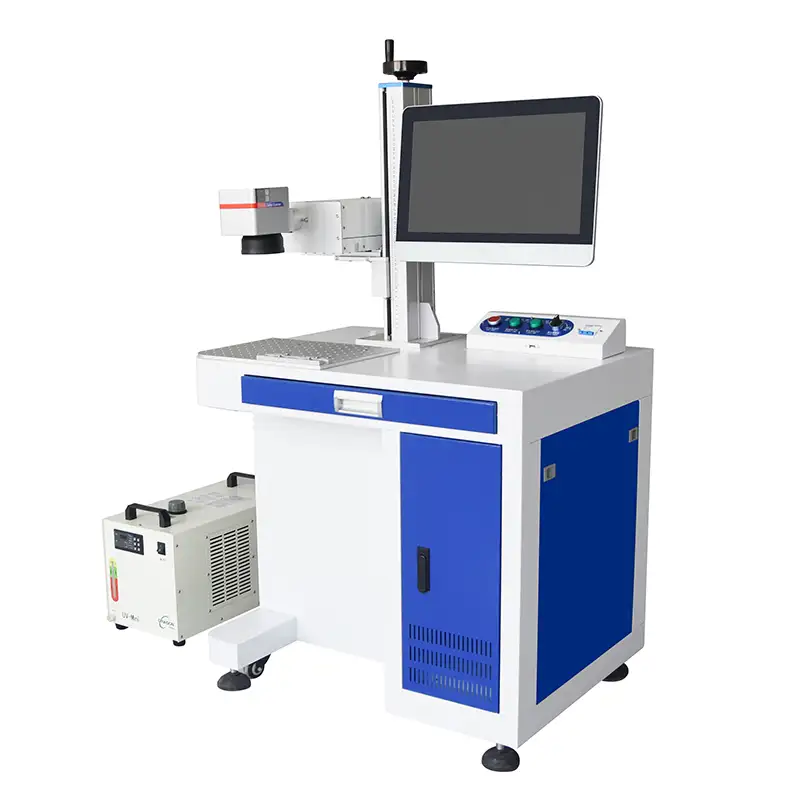
3W 5W 10W 15W 20W Industrial UV Laser Etchers Engraver Markers Etching Engraving UV Laser Marking Machine
Automotive Industry Marking Sample Display
Electronics & Semiconductor
High-Precision Laser Marking: The Standard for Semiconductor Traceability Industry Evolution & Miniaturization Challenges
Industry Evolution & Miniaturization Challenges
The semiconductor shift toward high integration and miniaturization renders traditional mechanical and ink-based marking obsolete. On sensitive substrates—including silicon wafers, thin-film circuits, and micro-PCBs—conventional methods risk thermal deformation, chemical contamination, and structural micro-fractures.
Advanced UV Laser Marking Machineand Fiber Laser Marking Machine systems address these challenges through non-contact “cold processing.” By achieving micron-level precision and 100% legibility for Data Matrix codes, laser technology ensures total life cycle traceability and rigorous Industry 4.0 quality compliance without compromising component integrity.
Technical Performance Comparison
| Feature | UV/Fiber Laser | Inkjet Printing | Mechanical Engraving |
| Precision | ≤ 10 μm | ~ 500 μm | ~ 100 μm |
| Stress Profile | Non-contact (Zero) | Non-contact | High Mechanical Stress |
| Durability | Permanent | Low (Subject to wear) | Permanent |
| Thermal Impact | Minimal/None | None | Moderate |
| Consumables | None | High (Inks/Solvents) | Tooling Wear |
Technical Superiority on Sensitive Substrates
Laser marking leverages photo-ablation to break molecular bonds rather than melting material, ensuring “zero-damage” identification on high-density electronics.
- Substrate Integrity: Ideal for heat-sensitive architectures; eliminates micro-fractures in brittle materials.
- High-Density Coding: Supports micron-scale 2D codes on 0201 components for granular asset tracking.
- Process Resilience: Marks remain legible through chemical etching, reflow soldering, and ultrasonic cleaning.
- Operational Efficiency: Ink-free operation reduces Total Cost of Ownership (TCO) and aligns with global ESG sustainability mandates.
Core Laser Specifications for Electronics
| Specification | UV Laser | Fiber Laser |
| Wavelength | 355 nm | 1064 nm |
| Processing Type | Cold Ablation | High-Speed Thermal |
| Application | Wafers, Glass, Flex-PCBs | Metals, Ceramics, IC Packaging |
| Marking Speed | ≤ 12,000 mm/s | ≤ 15,000 mm/s |
By implementing high-precision laser marking, manufacturers secure the data integrity and micron-level accuracy essential for next-generation semiconductor fabrication.
Electronics & Semiconductor Marking Applications:
- PCB & FPC Laser Marking (Printed Circuit Boards) to mark QR codes / Data Matrix codes, Serial numbers (SN), Production and batch information
- Rigid PCBs and flexible FPCs
- Multilayer circuit boards
- Chassis & Structural Parts Marking to do Deep engraving for durability, marking on rough or curved surfaces
- Frames and suspension systems
- Brake components
- Fasteners (bolts, nuts)
- Automotive Electronics Marking to mark Micro QR codes, Traceability codes
- ECU modules
- Sensors and connectors
- PCB boards
- Interior & Exterior Parts Marking to has a High visual quality and No surface damage marking
- Dashboard panels and buttons
- Plastic housings
- Automotive lighting components
- VIN Codes & Nameplate Marking to do the Permanent, tamper-proof marking, machine-readable codes
- Vehicle Identification Number (VIN)
- Metal nameplates
- Safety labels
Application Laser Marking Equipment and Demonstration Videos
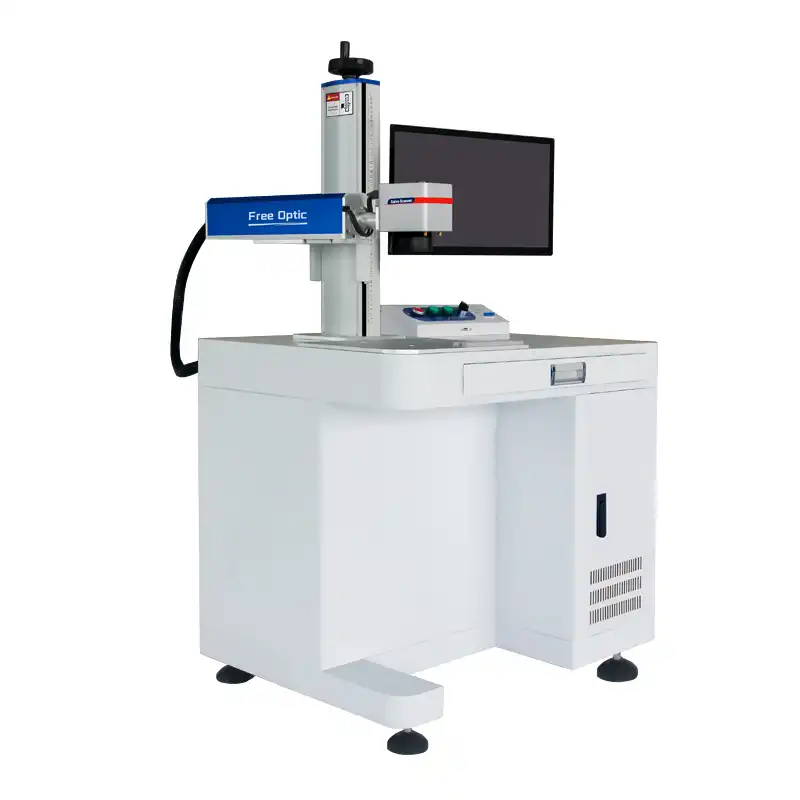
Desktop Fiber Laser Marking Engraving Machine 20W, 30W, 50W, 100W, 200W
3W 5W 10W 15W 20W Industrial UV Laser Etchers Engraver Markers Etching Engraving UV Laser Marking Machine
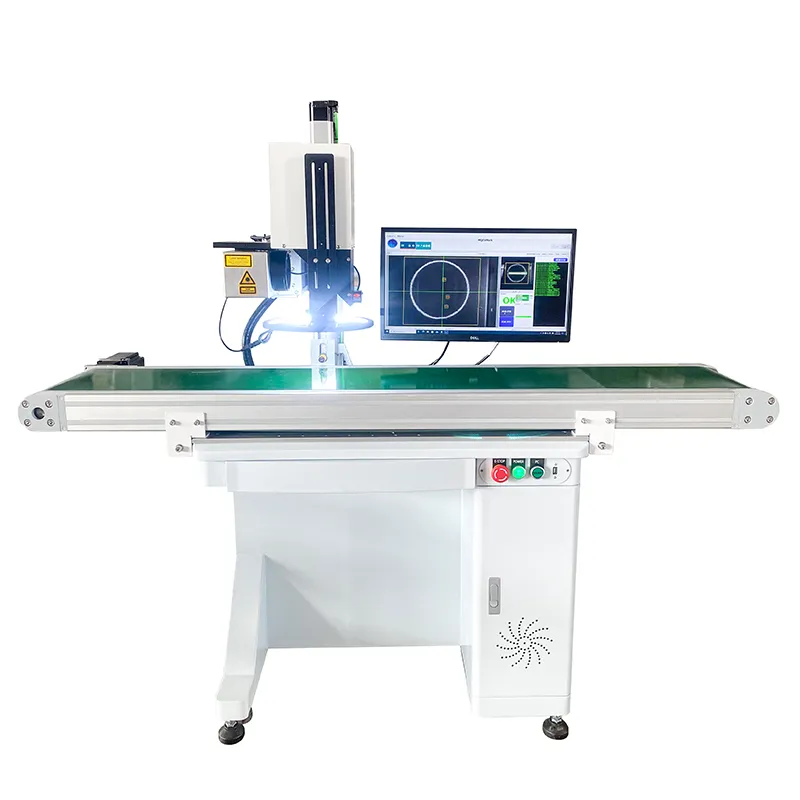
CCD Visual Positioning Laser Marking Machine
Electronics & Semiconductor Marking Sample Display

Medical Devices
Medical & Pharmaceutical Traceability: Regulatory Compliance via Laser Systems
Strategic Alignment with UDI & MDR Standards
The medical sector demands absolute hygiene and permanent traceability. As UDI (Unique Device Identification) and EU MDR regulations become mandatory, laser marking has superseded inkjet printing as the industry standard. Unlike traditional methods, laser technology eliminates risks of chemical leaching, ink fading, or particulate contamination during sterilization.
Comparison: Laser Marking vs. Conventional Identification
| Feature | Laser Marking (UV/Fiber) | Inkjet / Thermal Printing |
| Compliance | FDA/MDR Compliant | Risk of Non-compliance |
| Contamination Risk | Zero (Ink-free / Non-contact) | High (Chemical solvents/particulates) |
| Sterilization Resilience | Autoclave, Gamma, Chemical resistant | Subject to fading/delamination |
| Biocompatibility | Maintains substrate integrity | Potential chemical leaching |
| Resolution | Micron-level (≤ 10 μm) | Millimeter-level |
Cleanroom-Ready: Precision Identification in Sterile Environments
Laser systems are engineered for “Zero-Contamination” workflows. By utilizing photo-ablation or annealing, these systems create high-contrast marks within the material structure rather than applying surface layers, ensuring the sterile integrity of the substrate. Sector-Specific Applications & Technical Requirements
Surgical Instruments: Permanent marking on SS316L and Titanium alloys; resistant to repeated autoclave cycles (134°C at 2.1 bar).
Medical Implants: Biocompatible, non-toxic marking on pacemakers and orthopedic components without inducing heat-affected zones (HAZ).
Pharmaceutical Packaging: High-speed, tamper-proof coding on medicine bottle and box packaging; supports high-density 2D DataMatrix for anti-counterfeiting.
Technical Specifications for Medical-Grade Lasers
| Parameter | UV Laser (355 nm) | Fiber Laser (1064 nm) |
| Processing Method | Cold Marking | Thermal Annealing / Engraving |
| Primary Substrates | Medical Plastics, Glass, HD-PE | Stainless Steel, Titanium, Cobalt-Chrome |
| Pulse Duration | < 15 ns | 10 – 100 ns |
| Regulatory Fit | Fragile packaging, catheter tubes | Orthopedic implants, surgical tools |
Operational Advantages
Sterilization Resilience: Marks remain legible after exposure to Gamma radiation, EtO (Ethylene Oxide), and intensive chemical disinfection.
Precision Traceability: 100% readability of micro-scale UDI codes on small-bore components.
Sustainability: Eliminates consumables (inks/ribbons), reducing Total Cost of Ownership (TCO) and aligning with ESG clean-production mandates.
By integrating advanced laser marking machine, medical manufacturers achieve cradle-to-grave traceability while maintaining the highest levels of patient safety and regulatory compliance.
Medical Devices Marking Applications:
1. Medical Device Marking to mark UDI codes, Serial numbers and batch numbers, Manufacturer identification
- Surgical instruments (scissors, forceps, scalpels)
- Stainless steel medical tools
- Implantable devices (bone screws, joints)
2. Pharmaceutical Packaging Coding to mark Expiration dates, Batch numbers, QR codes / barcodes
- Cartons and paper packaging
- Plastic bottles and containers
- Blister packs (aluminum foil)
Medical Application Laser Marking Equipment and Demonstration Videos
3W 5W 10W 15W 20W Industrial UV Laser Etchers Engraver Markers Etching Engraving UV Laser Marking Machine
Desktop Fiber Laser Marking Engraving Machine 20W, 30W, 50W, 100W, 200W
CCD Visual Positioning Laser Marking Machine
Medical Devices Marking pictures

Hardware & Machinery
Industrial Strength: High-Contrast Laser Marking for Hardware and Machinery
The hardware and machinery industry requires durable, high-contrast, and permanent marking for a wide range of metal components. From industrial parts to tools and nameplates, manufacturers need marking solutions that can withstand intense mechanical wear, chemical corrosion, and extreme environmental exposure. Traditional methods like manual engraving or inkjet printing often fail under the stress of heavy-duty operations, whereas Fiber Laser Marking Machine creates a structural or chemical change on the metal surface that is virtually indestructible.
Engineered for Durability and Full Traceability
In the high-stakes world of heavy machinery, a lost serial number can lead to maintenance failures or safety hazards. Laser technology ensures that every DataMatrix code, logo, and technical specification remains legible throughout the machine’s entire service life. Key advantages for the hardware sector include:
- Material Versatility:Precise results on hardened steel, aluminum, titanium, and galvanized surfaces without compromising material strength.
- Abrasive Resistance:Marking stays clear even after exposure to industrial lubricants, sandblasting, or high-pressure cleaning.
- High-Speed Automation:Seamlessly integrates into production lines for real-time marking of high-volume hardware components.
By utilizing Fiber or MOPA laser systems, machinery manufacturers can achieve permanent traceability and brand protection, ensuring that critical identification survives the harshest workshop and field conditions.
High-Performance Industrial Engraving: Why Laser Marking is the Preferred Solution
In the modern manufacturing landscape, laser marking technology has become the preferred solution due to its ability to deliver deep engraving, high precision, and non-contact processing, while supporting seamless automation and high-volume production. Unlike traditional mechanical stamping or chemical etching, laser systems utilize concentrated light energy to modify material surfaces, ensuring that identification remains permanent and indestructible even under the most abrasive industrial conditions.
Optimized for Automation and Industrial Efficiency
The shift toward Smart Manufacturing requires marking solutions that are both fast and maintenance-free. Laser technology meets these demands by offering:
- Deep Engraving Capabilities:Capable of reaching depths required for parts that undergo post-processing, such as sandblasting, painting, or heavy-duty wear.
- Non-Contact Integrity:Since no physical tool touches the workpiece, there is zero mechanical stress, preventing deformation of sensitive or thin-walled components.
- High-Volume Integration:With high-speed scanning galvanometers, laser systems integrate directly into automated production lines, providing real-time serialization and 2D DataMatrix coding at unmatched speeds.
By utilizing Fiber, CO2 Laser Marking Machine, or UV laser systems, manufacturers in the automotive, aerospace, and heavy machinery sectors can achieve 100% traceabilityand brand protection while significantly reducing the overhead costs associated with traditional consumables.
Hardware & Machinery Applications:
- Industrial Components Marking to mark Part numbers, Batch codes, Technical specifications
- Gears, shafts, flanges
- Mold parts and machined components
- Precision mechanical parts
- Tools & Hardware Tools Engraving to mark Brand logos, Model numbers, Anti-counterfeiting marks
- Wrenches, screwdrivers, pliers
- Cutting tools and drill bits
- Fasteners Marking (Bolts, Nuts, Screws) to achieve Small marking areas, Curved or cylindrical surfaces
- Bolts, nuts, screws
- Springs and washers
- Nameplates & Industrial Labels for specifications, safety instructions, Barcodes / QR codes
- Equipment nameplates
- Stainless steel and aluminum tags
- Industrial identification plates
- Pipes & Metal Products Marking on metal pipes and tubes, profiles and sheet metal
Hardware & Machinery Application Laser Marking Equipment and Demonstration Videos
Desktop Fiber Laser Marking Engraving Machine 20W, 30W, 50W, 100W, 200W
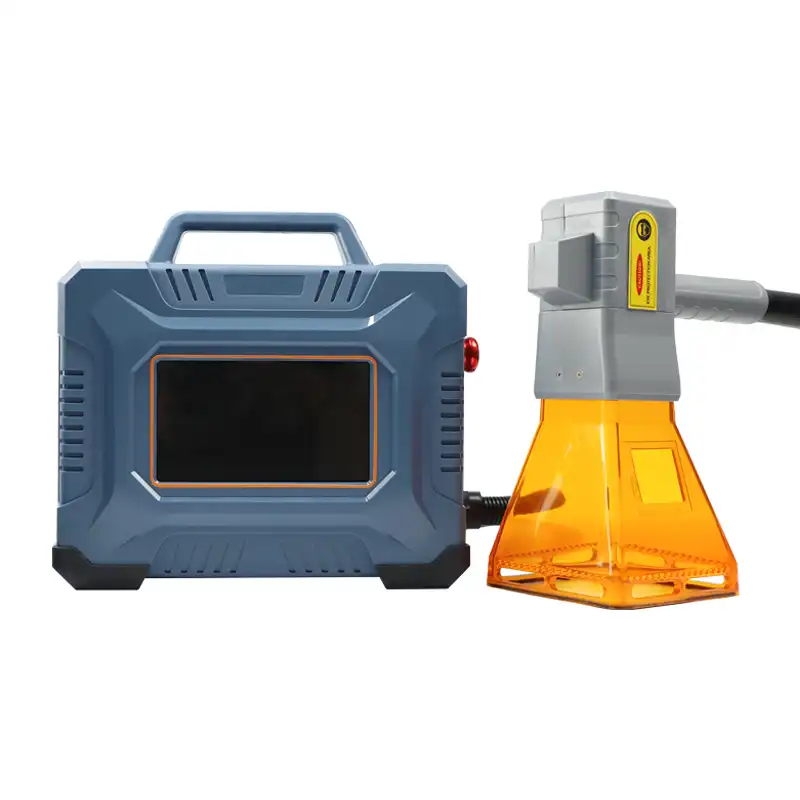
Mini Portable Handheld Fiber Laser Marking Machine 20W 30W 50W 60W
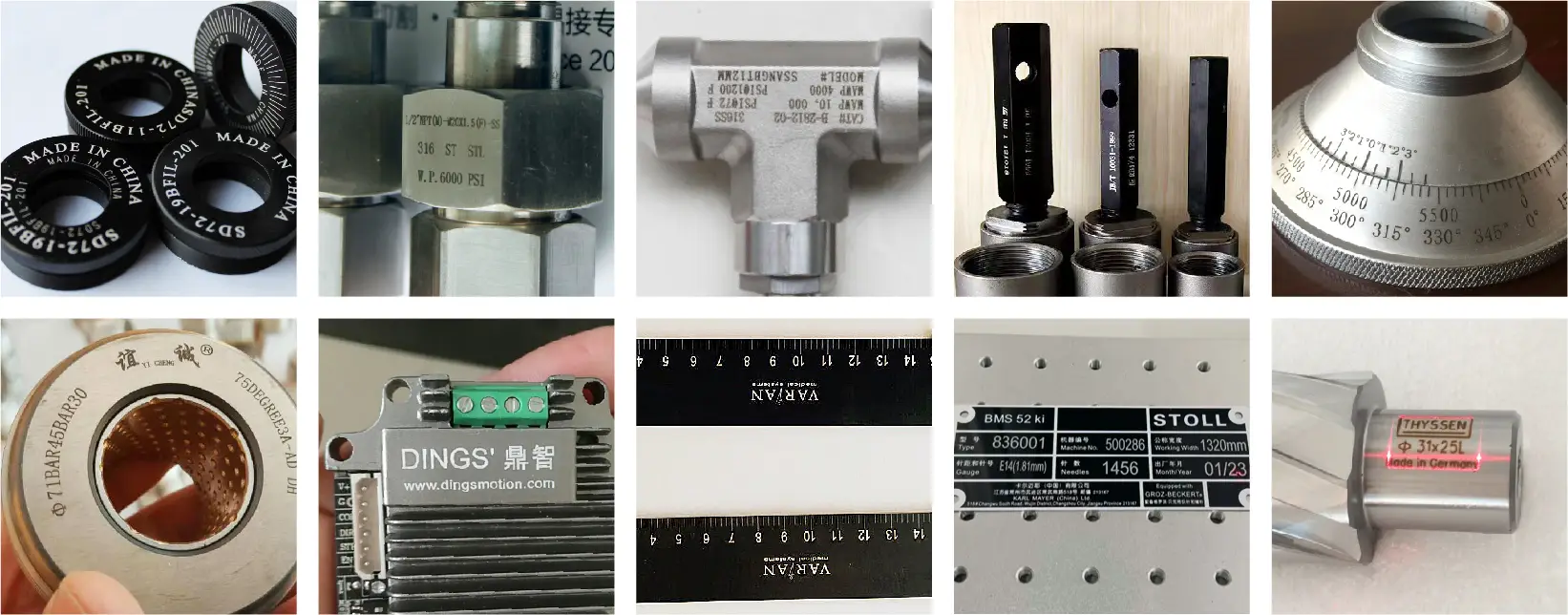
Hardware & Machinery Marking Sample Display
Packaging & Food Industry
Food Safety & Traceability: The Strategic Shift to Laser Coding Systems
Compliance, Integrity, and TCO Optimization in High-Volume Packaging
The food and beverage industry is transitioning from legacy inkjet systems to laser technology to mitigate risks of ink migration and chemical contamination. Under FDA and EFSA mandates, permanent traceability is non-negotiable.
With the adoption of a production line laser marking machine, manufacturers can achieve seamless, high-speed coding directly within automated packaging lines. Laser marking—utilizing CO₂, Fiber, or UV—physically alters the substrate to create tamper-proof, high-contrast identification (expiry dates, batch codes, QR codes) that remains legible throughout the product lifecycle.
Technical Performance: Laser Marking vs. Continuous Inkjet (CIJ)
| Feature | Laser Marking (CO2/UV/Fiber) | Continuous Inkjet (CIJ) |
| Contamination Risk | Zero (Non-contact/Ink-free) | High (Solvent/Ink migration risk) |
| Mark Permanence | Permanent (Tamper-proof) | Low (Susceptible to smudging/erasure) |
| Throughput Speed | > 1,000 units/min (Line-synced) | Variable (Speed affects legibility) |
| Maintenance | Minimal (No filters/no printheads) | High (Frequent cleaning/calibration) |
| Environmental Impact | Eco-friendly (Zero consumables) | High (Hazardous waste/VOCs) |
| TCO (3-Year) | Low (Primarily electricity costs) | High (Recurring ink/solvent costs) |
Industrial Applications and Substrate Compatibility
- Bottling & Canning: High-speed marking on PET, Glass, and Aluminum at speeds exceeding 100,000 BPH (Bottles Per Hour).
- Flexible Packaging: Precision coding on BOPP, PE, and Foil laminates without compromising the barrier integrity of the film.
- Cartons & Secondary Packaging: High-contrast ablation on organic substrates using CO2 lasers (6 μm) for maximum legibility.
Key Operational Advantages
- Hygienic Integrity: Eliminates the use of volatile organic compounds (VOCs) and solvents, ensuring a sterile production environment compliant with HACCP standards.
- Supply Chain Security: Etched markings prevent counterfeiting and unauthorized alteration of production data, ensuring 100% brand protection.
- Operational Uptime: Laser systems operate as “solid-state” devices, removing the downtime associated with clogged nozzles or ink replenishment.
By implementing advanced laser coding, manufacturers achieve a Zero-Waste production line while securing the data integrity and micron-level accuracy essential for modern global food supply chains.
Packaging & Food Applications:
- Paper Packaging (Cartons & Labels) Production date, Expiry date, Batch codes, Barcodes / QR codes
- Food cartons and boxes
- Outer packaging and labels
- Plastic Packaging (Bottles & Films)
- Water bottles and beverage containers
- Food trays and plastic packaging
- Flexible films (PE, PP, PET)
- Glass Packaging (Beverage & Condiment Bottles) on Glass beverage bottles, Sauce and condiment containers, Alcohol bottles
- Metal Packaging (Cans & Containers) on Aluminum cans, Metal food containers, Tin packaging
- Flexible & Composite Packaging on Vacuum packaging bags, Multi-layer films, Snack packaging
Packaging & Food Application Laser Marking Equipment and Demonstration Videos
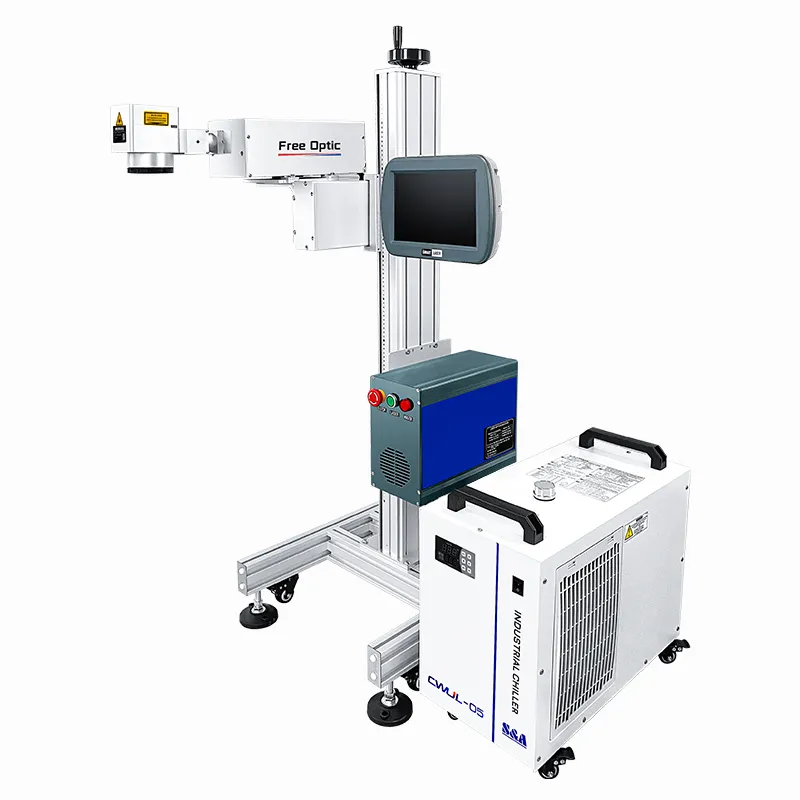
3W 5W 8W 10W 15W 20W Industrial Flying UV Laser Etching Engraving Marking Machine for assembly line
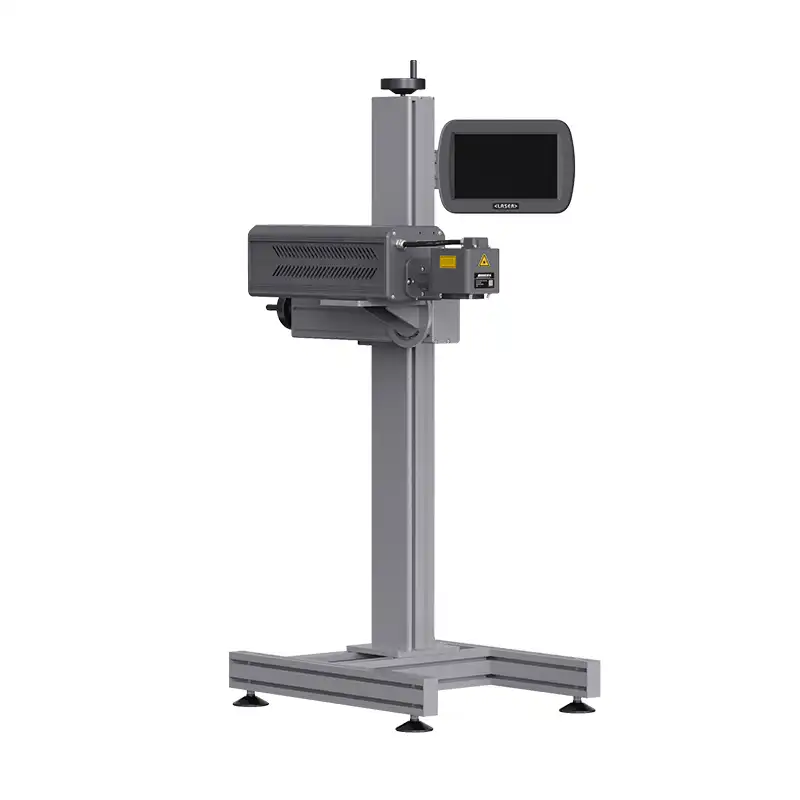
High Speed Auto Online Flying Co2 Laser Marking Machine Industrial Expiry Date Batch Coding Printer
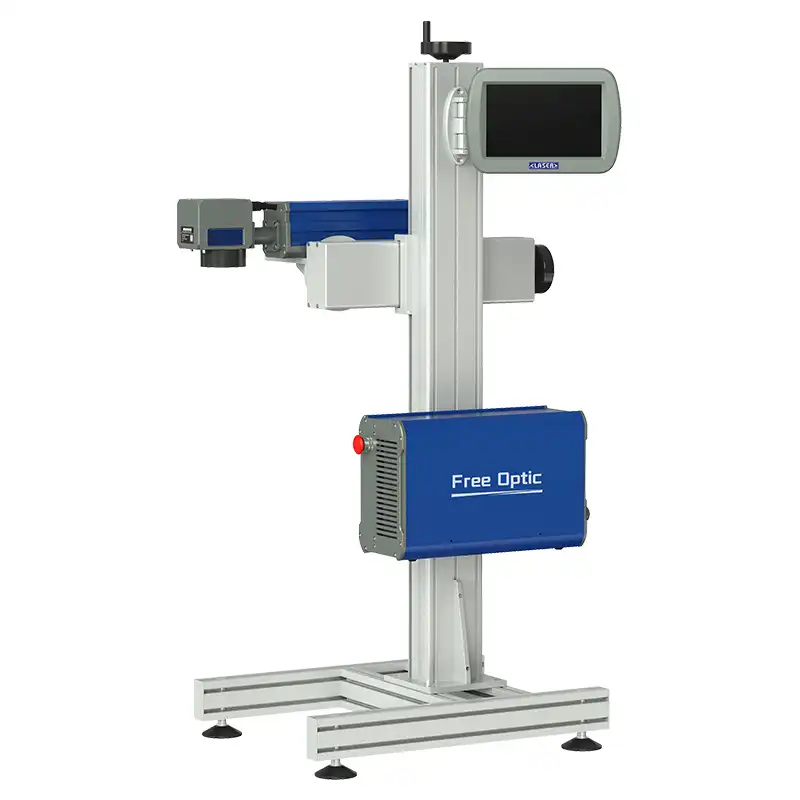
20w 30w 50w High Speed Online Assembly Line Flying Laser Marking Engraving Printing Machine
Packaging & Food Marking Sample Display

Cosmetics & Consumer Goods
Elevating Brand Identity: Precision Laser Marking for Luxury Cosmetics
Aesthetic Excellence and Total Lifecycle Traceability
In the premium beauty sector, packaging aesthetics are inseparable from brand value. As manufacturers move toward sustainable and complex materials, laser machine for marking has replaced traditional labeling to provide permanent, high-definition identification. By utilizing UV and CO2 laser systems, brands can achieve intricate decorative engravings and mandatory traceability codes (DataMatrix/QR) directly on glass, acrylic, and eco-friendly substrates without the risk of ink smudging or label delamination.
Comparative Analysis: Laser Marking vs. Conventional Labeling
| Feature | Laser Marking (UV/CO2) | Screen Printing / Labeling |
| Aesthetic Quality | Integrated, high-end “DNA” feel | Applied surface layer; prone to peeling |
| Customization | Real-time, on-demand engraving | Requires plates/screens (High setup cost) |
| Durability | Permanent; resistant to oils/alcohol | Susceptible to fading and abrasion |
| Substrate Versatility | Glass, Wood, Anodized Aluminum, Acrylic | Limited adhesion on high-gloss surfaces |
| Sustainability | Zero waste; 100% recyclable | Inks, solvents, and adhesive waste |
Sector-Specific Applications & Material Integration
- Glass & Crystal: Precision frosting and micro-engraving on fragrance bottles usingUV Laser Marking Machine (355nm) without inducing structural micro-cracks.
- Heat-Sensitive Plastics: “Cold Marking” UV lasers (355 nm) for high-contrast identification on thin-walled tubes and premium caps, preventing thermal deformation.
- Sustainable Materials: Clean, chemical-free marking on bamboo, recycled ocean plastics, and FSC-certified wood packaging.
Strategic Advantages for Luxury Brands
- Anti-Counterfeiting & Grey Market Protection: Permanent, indestructible batch codes and serialized QR codes are etched into the substrate, preventing tampering and ensuring 100% supply chain transparency.
- Micro-Level Personalization: Supports high-speed, localized customization for “limited edition” campaigns and bespoke consumer gift sets.
- Operational Efficiency: Eliminates consumables and reduces Total Cost of Ownership (TCO) by removing downtime associated with ink replenishment and printhead maintenance.
By adopting advanced laser technology, cosmetics manufacturers align their production with global ESG (Environmental, Social, and Governance) standards while delivering a flawless, premium finish that secures brand integrity from the factory floor to the consumer.
Applications:- Cosmetic Packaging Containers to mark Brand logos, Product names, Batch numbers
- Plastic bottles (lotions, skincare products)
- Glass containers (perfume bottles, serums)
- Acrylic packaging
- Metal Cosmetic Packaging like Aluminum lipstick tubes, Metal powder cases, Luxury cosmetic shells
- Outer Packaging & Labels like Production dates, Expiry dates, Barcodes and QR codes on Paper boxes and cartons, Packaging labels
- Cosmetic Tools & Accessories like marking on Makeup brushes, Mirrors, Beauty tools
- Glass & Transparent Materials like Perfume bottles, Skincare containers
Cosmetics & Consumer Goods Application Laser Marking Equipment and Demonstration Videos
3W 5W 8W 10W 15W 20W Industrial Flying UV Laser Etching Engraving Marking Machine for assembly line
3W 5W 10W 15W 20W Industrial UV Laser Etchers Engraver Markers Etching Engraving UV Laser Marking Machine
Cosmetics & Consumer Goods Marking Sample Display

Jewelry & Luxury Goods
Artisan Precision: Laser Systems in Luxury Jewelry & Watchmaking
Micro-Level Customization and Material Integrity
In the luxury sector, engraving is a hallmark of craftsmanship and brand identity. As designs move toward microscopic complexity, laser technology has replaced manual and mechanical methods to provide ultra-fine, non-contact solutions. By utilizing Fiber Laser Marking Machineand UV laser systems, manufacturers achieve micron-level accuracy on gold, platinum, and exotic alloys, ensuring that intricate logos and hallmarks are integrated without compromising the structural integrity or value of the precious metal.
Technical Performance: Laser Marking vs. Mechanical Engraving
| Feature | Fiber/UV Laser Marking | Mechanical Engraving |
| Precision | Micron-level (≤ 10 μm) | Sub-millimeter |
| Material Loss | Zero (Non-contact) | Moderate (Friction/Shaving) |
| Surface Stress | Zero (No physical contact) | High (Risk of deformation) |
| Complexity | Intricate 2D codes & micro-text | Limited to simple geometries |
| Throughput | High-speed / Automated | Slow / Manual labor intensive |
Sector-Specific Applications & Material Value
- Precious Metals: Loss-free hallmarking on Gold (AU), Silver (AG), and Platinum (PT); the non-wear process ensures 100% material retention during engraving.
- High-End Horology: Precision marking on watch crowns, case backs, and movement components; capable of high-contrast identification on Grade 5 Titanium and Ceramics.
- Gemology & Bespoke Jewelry: Micro-inscription of serial numbers on diamond girdles and personalized messages on curved inner-band surfaces.
Strategic Advantages for Luxury Brands
- Anti-Counterfeiting & Security: Implementation of invisible micro-codes and permanent, tamper-proof serial numbers that protect brand authenticity and simplify global supply chain tracking for collectors.
- Bespoke On-Demand Customization: Enables real-time, high-speed personalization for limited editions or individual client requests without the need for specialized tooling.
- Pristine Finish: Delivers a flawless, high-definition mark that aligns with the “artisan touch,” maintaining the high-end prestige of world-class jewelry houses.
By integrating advanced laser marking, luxury manufacturers bridge the gap between traditional craftsmanship and Industry 4.0 precision, ensuring every piece remains a secure and traceable asset.
Jewelry & Luxury Goods Applications:
- Jewelry Engraving (Rings, Necklaces, Bracelets) to mark Brand logos, Metal purity marks (e.g., Au750, 925 silver), Personalized engravings (names, dates)
- Rings, necklaces, bracelets
- Earrings and pendants
- Precious Metal Products like Gold, silver, platinum items, Gold bars and commemorative coins marking
- Luxury Accessories like Watches, Leather goods hardware (buckles, zippers), High-end fashion accessories to mark Logos, Serial numbers, Anti-counterfeiting codes
- Watch Industry Applications like Watch cases, Watch straps, Dials
- Crystal & Glass Engraving like Crystal ornaments, Luxury decorative items
Jewelry & Luxury Goods Application Laser Marking Equipment
Desktop Fiber Laser Marking Engraving Machine 20W, 30W, 50W, 100W, 200W
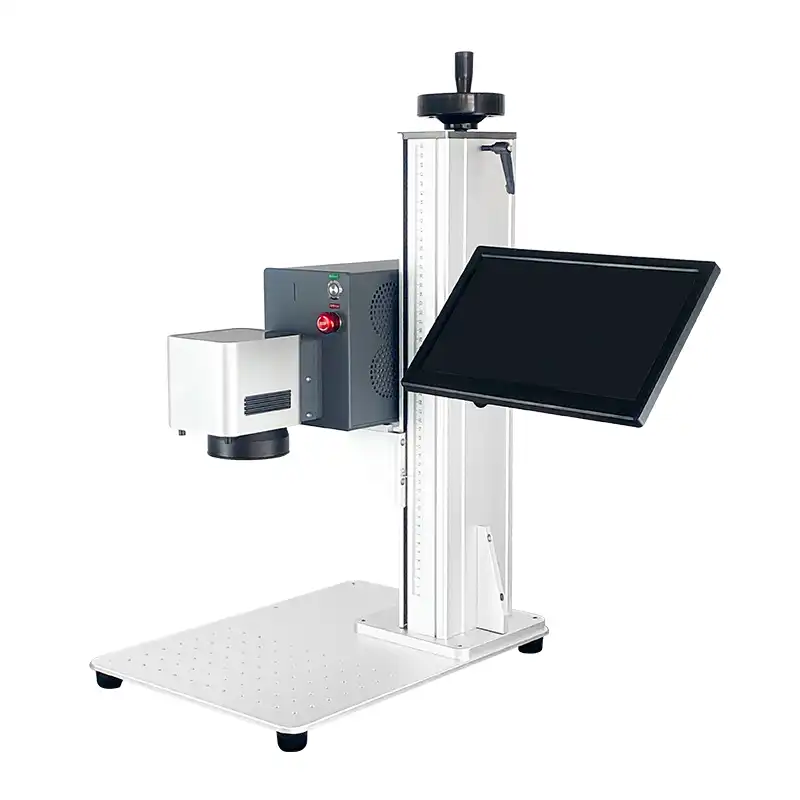
Integrated All-in-one Portable Small Size Fiber Laser Marking Machine 20W, 30W, 50W
Jewelry & Luxury Goods Marking Sample Display

Gifts & Advertising Industry
Creative Precision: Why Laser Technology Dominates Gift Customization & Advertising
In the fast-paced world of marketing and personalized retail, laser technology plays a crucial role in the gifts customization and advertising production industry due to its precision, non-contact processing, and flexibility. Unlike traditional mechanical engraving or screen printing, Laser Marking Machine systems offer a digital-to-physical workflow that handles everything from individual bespoke items to high-volume promotional runs with unmatched speed and consistency.
Unmatched Versatility for Modern Advertising Media
The ability to mark a vast array of materials—including wood, acrylic, glass, leather, and coated metals—makes laser systems the ultimate tool for creative professionals. Key advantages for the advertising sector include:
- Intricate Graphic Detail: Achieving high-resolution logos, photographic engravings, and complex typography that would be impossible with traditional tools.
- Non-Contact Material Safety: Since no physical force is applied, there is zero risk of cracking or scratching delicate substrates like crystal awards or thin-walled acrylic displays.
- On-Demand Personalization: Seamlessly switching between designs for customized corporate gifts, trophies, and signage without the need for costly plates or setups.
By utilizing CO2 or Fiber laser or UV laser systems, advertising firms and gift manufacturers can achieve limitless creative expression while significantly reducing lead times and material waste in a highly competitive market.
Applications in the Gift Industry
Personalized Custom Gifts Metal materials like
- Stainless steel tumblers with engraved names
- Metal business card holders
- Customized pens and keychains
Non-metal materials like
- Wooden photo frames
- Leather notebooks with embossed logos
- Acrylic ornaments
Other materials like
- Glass (wine bottles, perfume bottles)
- Plastics (cosmetic packaging, electronics housings)
- Ceramics and jade
A highly popular segment in the premium gift market
- 3D crystal portraits
- Corporate souvenirs
- Tourist keepsakes
- Awards and trophies
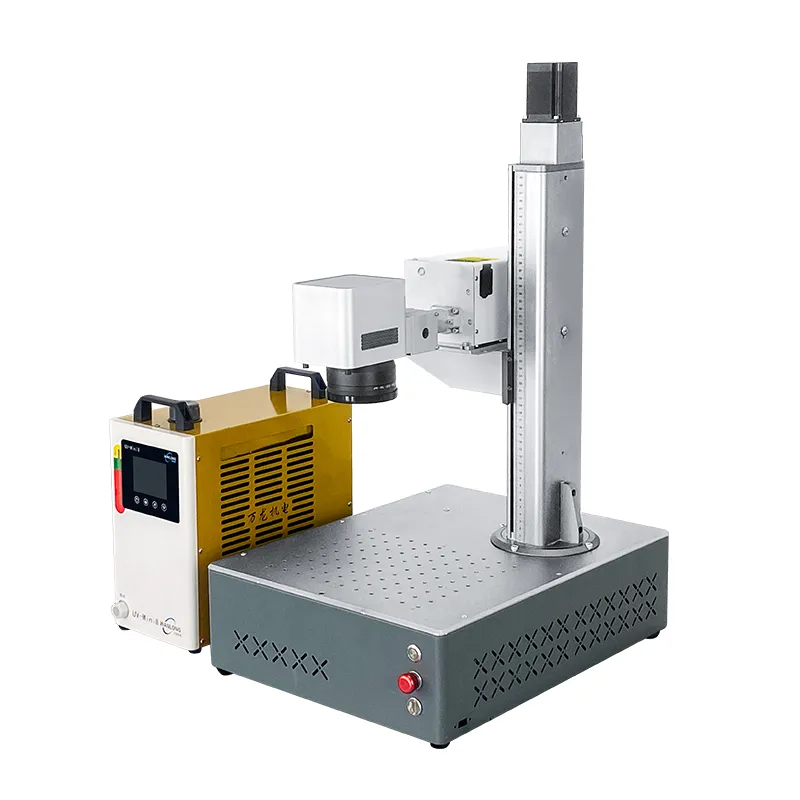
Applications in the Advertising Industry
- Metal tags
- Equipment labels
- Outdoor signage markings
- cutting and marking of acrylic, wooden boards, and paper products.
- custom-made and batch-processed plate cutting and hollowing out, wooden handicrafts, decoration mosaic cutting.
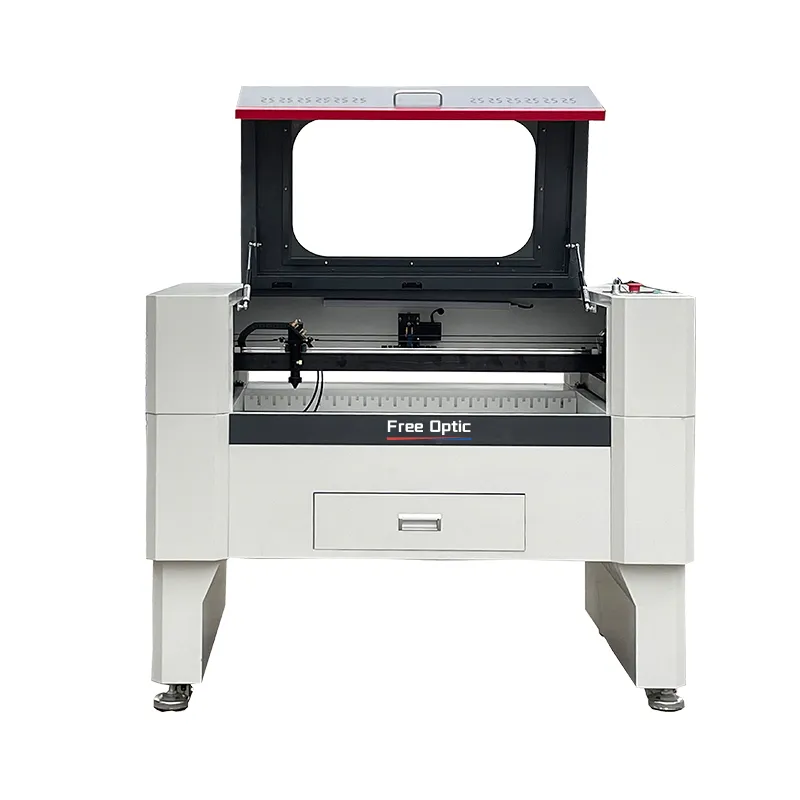
Gifts & Advertising Marking Sample Display
